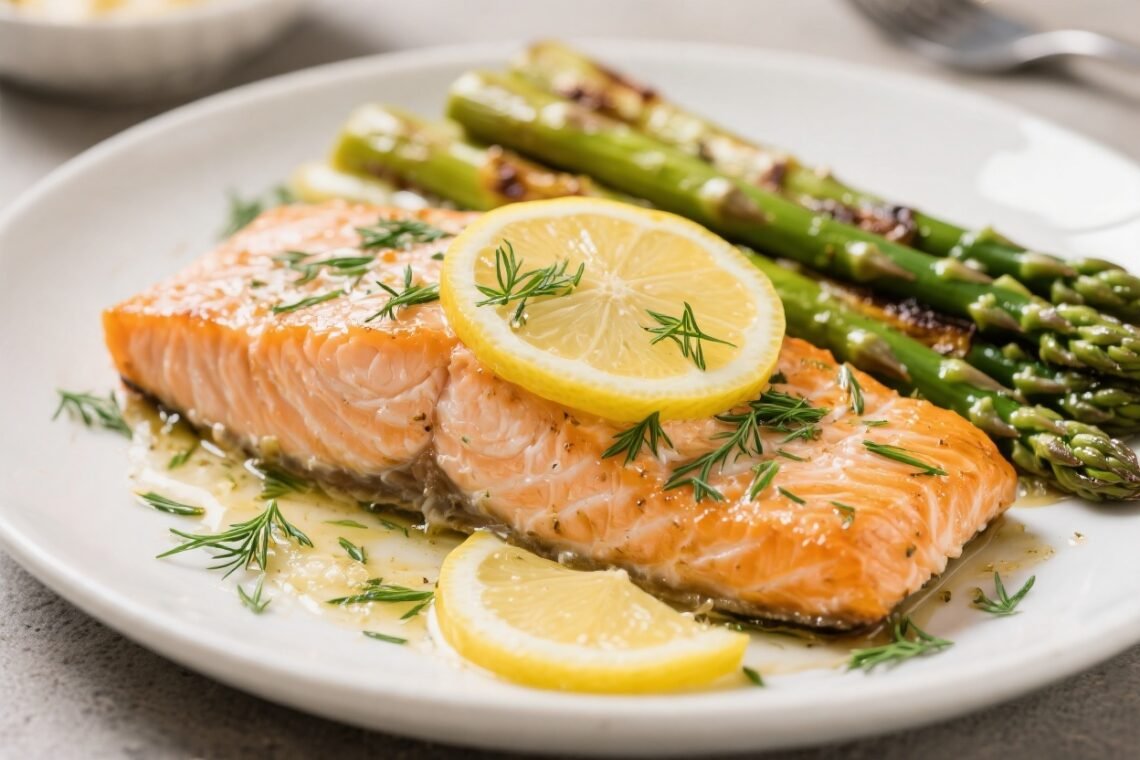
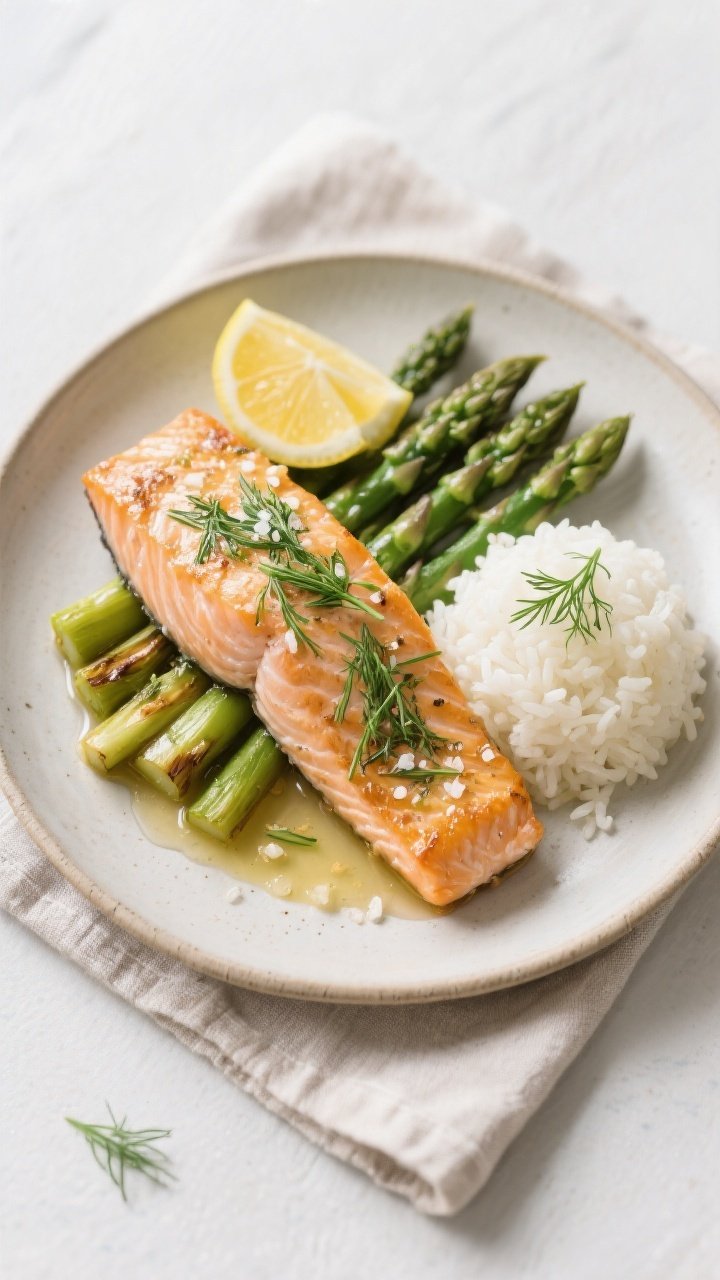
This is a calm, gentle dinner that still feels special. Lemon dill baked salmon is light, flaky, and full of clean flavors that won’t overwhelm your senses. The bright lemon, fresh dill, and tender asparagus roast together on one pan, making cleanup a breeze.
It’s rich in omega-3s and lean protein, yet mild enough for evenings when your appetite is low or your stomach is sensitive. Serve it with rice, potatoes, or just as is for a quiet, nourishing meal.
What Makes This Recipe So Good
- Simple, fresh flavors: Lemon and dill enhance the salmon without masking its natural taste. It’s zesty but gentle.
- One-pan convenience: Salmon and asparagus roast together, saving time and dishes.
- Quick cooking: Dinner is on the table in about 25 minutes, with minimal prep.
- Nausea-friendly: The flavors are mild, the texture is soft and flaky, and there’s no heavy cream or strong spices.
- Nutritious: Salmon delivers omega-3 fatty acids and lean protein; asparagus adds fiber, vitamins, and color.
What You’ll Need
- Salmon fillets: 4 pieces (about 5–6 ounces each), skin-on or skinless
- Lemons: 2, one for zest and juice, one for slices
- Fresh dill: About 1/4 cup, finely chopped, plus extra fronds for garnish
- Asparagus: 1 pound, trimmed
- Olive oil: 2–3 tablespoons
- Garlic: 1 small clove, finely minced (optional for very sensitive stomachs)
- Salt: Kosher or sea salt
- Black pepper: Freshly cracked (or skip if pepper feels too sharp)
- Butter: 1–2 tablespoons, cut into small pieces (optional, for richness)
- Optional sides: Cooked rice, quinoa, or small roasted potatoes
Step-by-Step Instructions
- Preheat the oven: Set it to 400°F (200°C).
Line a large baking sheet with parchment for easy cleanup.
- Prep the asparagus: Trim the woody ends. Toss spears with 1 tablespoon olive oil, a pinch of salt, and a little pepper. Spread them on one side of the pan in a single layer.
- Season the salmon: Pat the fillets dry with paper towels.
Place them skin-side down on the other side of the pan. Drizzle with 1–2 tablespoons olive oil. Sprinkle with salt and pepper.
Add lemon zest over the top and a light squeeze of lemon juice.
- Add dill and garlic: Sprinkle chopped dill over the salmon. If using garlic, scatter a small amount on the fish and a touch on the asparagus. Keep it light if you’re nausea-prone.
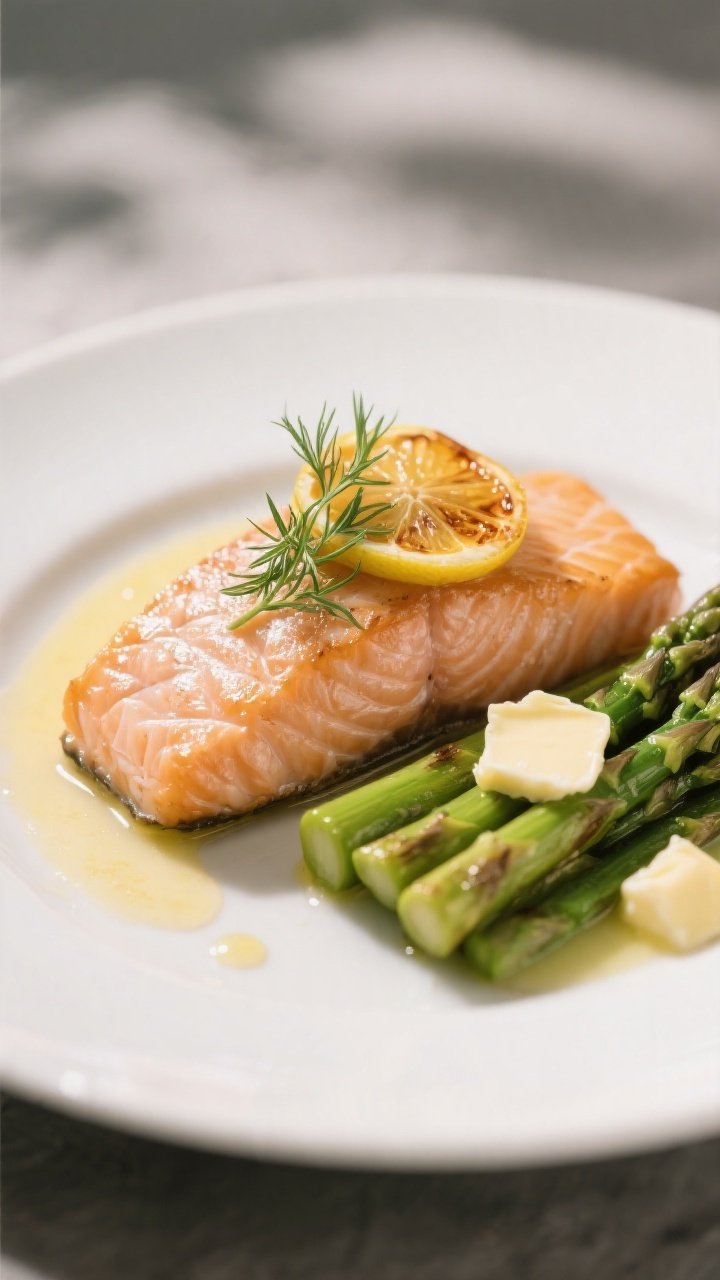
- Top with lemon and butter: Lay a thin lemon slice or two over each fillet.
Dot with small pieces of butter if you want a silkier finish.
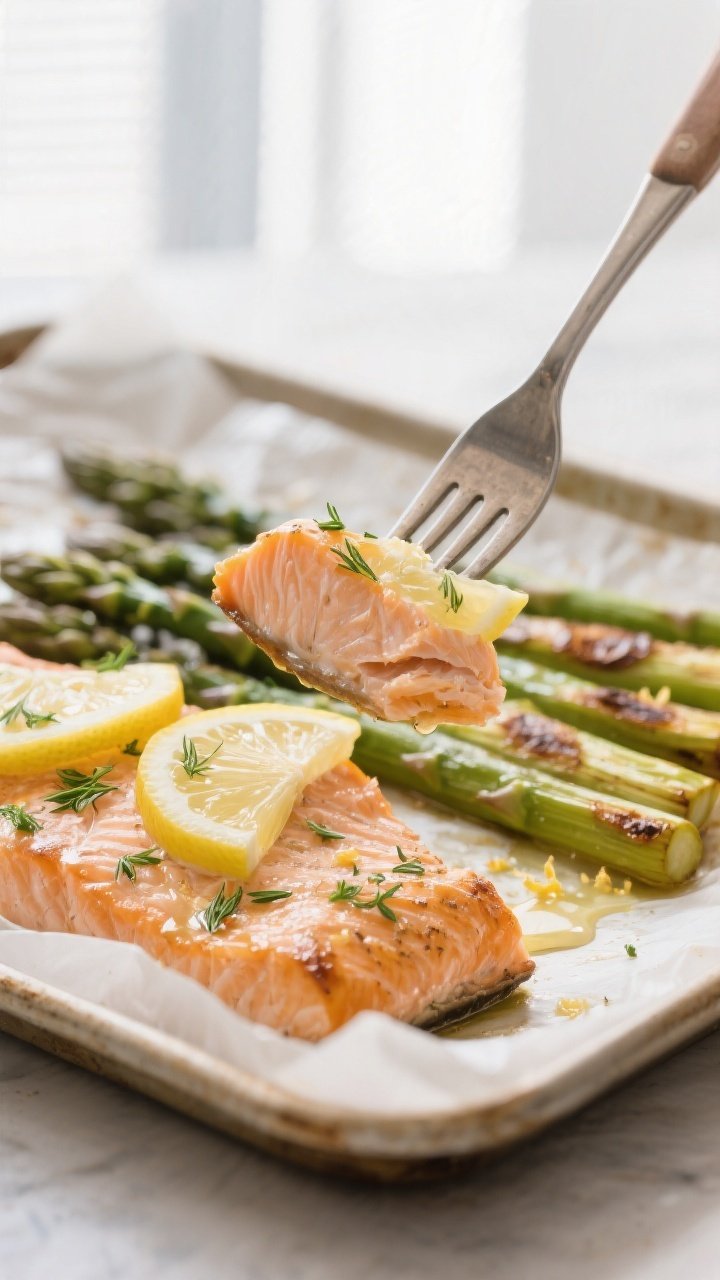
- Roast: Bake for 10–14 minutes, depending on thickness. The salmon is done when it flakes easily with a fork and looks just opaque in the center. Asparagus should be crisp-tender with a bit of browning.
- Rest and finish: Let the salmon rest for 2 minutes on the pan.
Taste the asparagus and add a squeeze of lemon if desired. Garnish with extra dill fronds.
- Serve: Plate the salmon with asparagus and any pan juices. Add your chosen side and a final sprinkle of salt to brighten everything.
How to Store
- Refrigerate: Store leftovers in an airtight container for up to 2 days.
Keep salmon and asparagus together or separate—both ways work.
- Reheat gently: Warm in a 275°F (135°C) oven for 10–12 minutes or until just heated through. Avoid microwaving for too long, which can dry the fish.
- Serve cold: Flaked cold salmon is great over greens or rice with a squeeze of lemon and a spoon of yogurt or light vinaigrette.
- Freezing: Cooked salmon can be frozen up to 2 months, but texture is best fresh. Asparagus does not freeze well once roasted.
Benefits of This Recipe
- Omega-3 support: Salmon provides EPA and DHA, which support heart and brain health.
- Lean protein: Satisfying without heaviness, helping maintain energy and satiety.
- Gentle flavors: Lemon and dill are bright yet soft on the palate, helpful on queasy days.
- Balanced plate: Pairing salmon with asparagus gives you protein, fiber, vitamins A, C, and K, and minerals like selenium.
- Low effort, high payoff: Minimal prep and cleanup make this a practical weeknight staple.
What Not to Do
- Don’t overcook: Dry salmon is stringy and tough.
Pull it when the center is just opaque and flakes easily.
- Don’t drown it in lemon juice: Too much acid can turn the flavor harsh and start “cooking” the fish before it hits the oven.
- Don’t skip drying the fish: Patting the fillets dry helps the surface roast, not steam.
- Don’t overload the pan: Crowding traps moisture. Give the asparagus and salmon space for good browning.
- Don’t go heavy on garlic or pepper if sensitive: Keep seasoning light if your stomach is unsettled.
Alternatives
- Different herbs: Swap dill for parsley, chives, or tarragon. These keep the flavor soft and fresh.
- Vegetable swap: Use green beans, broccolini, or zucchini.
Cut to similar thickness so everything cooks evenly.
- Citrus twist: Try Meyer lemon or a mix of lemon and orange for gentle sweetness.
- Dairy-free: Skip the butter and use a drizzle of extra olive oil for richness.
- Foil pack method: Wrap salmon, dill, and lemon in a foil packet and bake 12–15 minutes for extra-moist results.
- Skin-on vs. skinless: Skin-on helps keep moisture. If skinless, watch the cook time closely.
- If you can’t do asparagus: Roast baby carrots or peeled, thinly sliced parsnips alongside. They’re sweet and gentle.
FAQ
How do I know when salmon is done?
The flesh should turn from translucent to opaque and flake easily with a fork.
A thermometer inserted into the thickest part should read about 125–130°F for medium, or up to 135°F if you prefer it more done. Pull it a touch earlier if it will rest on the hot pan.
Can I use frozen salmon?
Yes. Thaw it in the refrigerator overnight or under cold running water in its packaging.
Pat it very dry before seasoning to prevent steaming and to help the dill and lemon adhere.
What if I don’t like dill?
Use parsley, chives, or a mix of both. They add a fresh note without dominating. Tarragon also works, but use lightly as it’s more aromatic.
Is this safe for nausea-prone days?
Generally yes, thanks to the mild flavors and tender texture.
Keep garlic and pepper minimal, and use just a little lemon. Serve with plain rice or toast for a gentler meal.
Can I cook everything in a skillet instead?
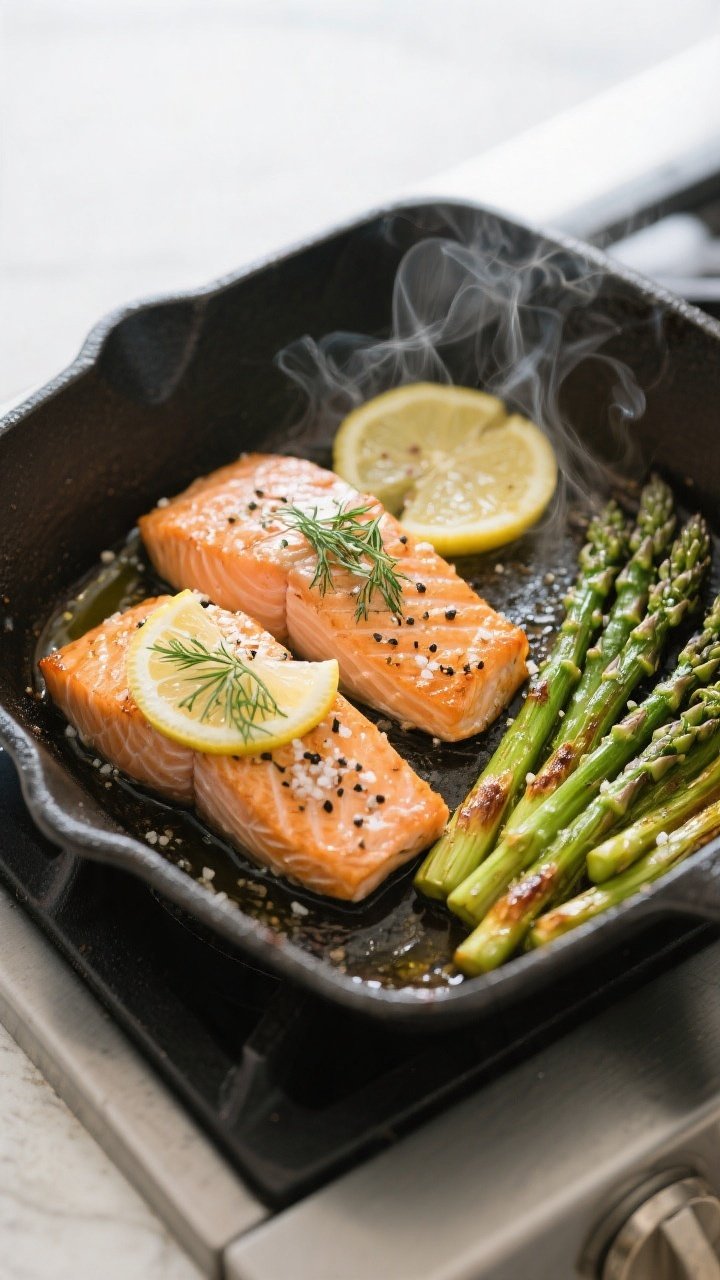
You can. Sear the salmon lightly in an oven-safe skillet, add asparagus around it, top with lemon and dill, and finish in a 400°F oven until flaky.
This gives a touch more browning on the fish.
What sides go best?
Simple ones. Steamed rice, quinoa, roasted baby potatoes, or a soft mashed potato keep the dish easy and comforting. A spoon of plain yogurt with lemon on the side is nice too.
How do I prevent a strong “fishy” smell?
Use fresh salmon, cook it soon after buying, and avoid overcooking.
A quick rinse, thorough pat dry, and a bit of lemon zest on top help keep the aroma clean.
Wrapping Up
Lemon dill baked salmon is a calm, reliable dinner you can make any night. It’s bright but not intense, nourishing without heaviness, and quick to pull together on one pan. With a few fresh ingredients and a gentle touch, you’ll get tender salmon, crisp-tender asparagus, and a meal that feels good to eat—especially when you want something soothing and simple.
Keep this one in your weeknight rotation and adjust the seasonings to match how you feel that day.
Printable Recipe Card
Want just the essential recipe details without scrolling through the article? Get our printable recipe card with just the ingredients and instructions.